Community Finance
Community Development Loans
The main community development loans explained: predevelopment, acquisition, construction, mini-perm and facilities, plus what lenders ask.
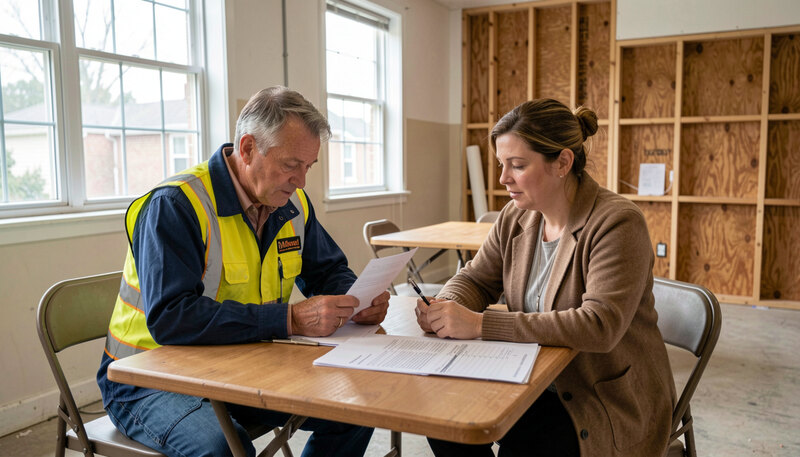
A community development loan is financing made to a project because of what it does for a place, not only for what it earns. The label covers a family of products that correspond to the stages of a project: money to explore, money to acquire, money to build, money to hold until permanent financing arrives. This guide walks through the main types, the terms borrowers typically see, what lenders ask for, and where these loans come from.
What is a predevelopment loan?
Before a project can borrow construction money, someone has to pay for the work that proves it can be built: architects, engineers, environmental studies, appraisals, legal review, market analysis. Predevelopment loans cover exactly those costs, usually in small amounts relative to the total project, and they carry the highest risk in the stack because nothing has been built yet and the project may still fail to assemble its permanent funding. Community lenders and CDFI loan funds make most of these loans; banks rarely touch this stage. Terms run months to a few years, interest-only is common, and repayment usually comes out of the construction or permanent closing.
How do acquisition and bridge loans work?
Acquisition loans buy the site or building. In neighborhoods where market-rate buyers move fast, a nonprofit often cannot wait for its full financing stack to close before it signs a purchase contract, so the acquisition loan exists to take the property off the market. Bridge loans are cousins: they span a gap, typically between a committed source that pays later, such as a tax credit equity schedule or a government reimbursement, and the costs that come due now. Both products price speed and flexibility above rate, and both are classic CDFI territory because the collateral is often unusual and the timeline tight.
What are construction and mini-perm loans?
Construction loans fund the build itself, drawn in stages against inspected work, and they convert to a permanent loan or get repaid by one at completion. Between construction and full permanence sits the mini-permanent loan, typically a few years, which carries a finished building while it leases up, stabilizes operations and assembles the track record a permanent lender wants. In affordable housing, the permanent layer might be a conventional mortgage, a HUD-insured product, or a bond financed through a housing finance agency. The Office of the Comptroller of the Currency's community affairs pages describe how regulated institutions participate in this landscape.
What about facilities, equipment and working capital?
Community development loans extend beyond housing. Nonprofit borrowers use them to buy or renovate community facilities: health clinics, childcare centers, charter schools, arts venues, grocery stores in food deserts. Equipment loans fund the machinery inside, and working capital lines smooth the rhythm of organizations paid on government contracts that reimburse slowly. The community investment guide describes the wider flow these products belong to.
What do lenders actually ask for?
The paperwork is consistent across the sector. A borrower presents the project description, the development budget, an operating pro forma, a sources-and-uses table, evidence of site control, organizational financials and the resumes of who will manage the work. A lender then tests the repayment story: where the money comes back from, over what time, with what cushion if costs run over or rents come in slow. For a housing project, the income side might be restricted rents with operating subsidies; for a facility, program revenue or a government service contract. Community lenders will also test the mission fit, asking who the project serves and whether conventional finance was genuinely unavailable or unsuitable.
Who makes these loans?
Four families of lenders dominate. CDFI loan funds and community development banks write the early and unusual loans, as the loan fund guide and the CDFI explainer detail. Regulated banks write construction and permanent loans, often inside their Community Reinvestment Act programs. Public agencies lend directly: housing finance agencies, municipal departments like DC's DHCD, and federal programs that flow through local administrators. And specialized intermediaries such as LISC and Enterprise Community Partners combine lending, equity syndication and grants under one roof. In the District specifically, the DC programs guide shows where the public loans sit among the other tools.
How should a borrower sequence the stack?
The practical skill is ordering the money. A sensible sequence starts with the cheapest, most patient capital for the earliest risk: a predevelopment loan or grant pays for design while site control is negotiated; an acquisition loan closes the purchase; construction and permanent money, often with tax credit equity, take over once the design and the community case are proven. Each layer's term must outlast the wait for the next one, and each lender's conditions must be compatible with the others, which is why experienced developers talk to every source at once rather than one at a time. The full architecture appears in how nonprofit housing projects are financed.