Community Finance
What Is a CDFI?
A clear guide to Community Development Financial Institutions: the four types, Treasury certification, what they fund and who they serve.
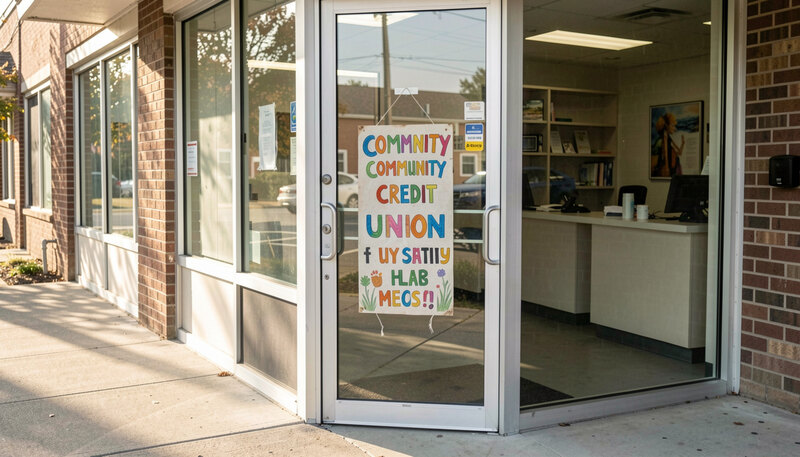
A CDFI, or Community Development Financial Institution, is a lender whose primary mission is to serve people and places that conventional finance leaves out. The label is not self-applied: in the United States, the Treasury Department's CDFI Fund certifies institutions that meet a formal test of community mission, target market and accountability. This guide explains what certification means, the four main types of CDFI, what they finance, and how a borrower or project can approach one.
Where does the CDFI label come from?
The CDFI Fund was created in 1994 under the Riegle Community Development and Regulatory Improvement Act, inside the Treasury Department. Its job is to grow the capacity of lenders working in economically distressed communities, and certification is its gatekeeping tool. To be certified, an institution must show that community development is its primary mission, that it predominantly serves a defined low-income or underserved target market, that it provides development services alongside its financing, and that it is accountable to the community it serves. Certification is reviewed, not granted once forever, and the public can look up certified institutions on the CDFI Fund website. More than a thousand institutions hold the certification today, and they range from tiny loan pools run by a handful of staff to regulated credit unions with billions in assets.
What are the four types of CDFI?
The label covers four different institutional shapes. Community development banks are regulated banks, often small, that put most of their lending into distressed areas. Community development credit unions are member-owned cooperatives serving low-income savers and borrowers, sometimes with a few hundred members and sometimes with hundreds of thousands. Community development loan funds are usually nonprofits: they gather capital from banks, foundations, religious institutions and government, then lend it to projects that banks decline. Community development venture capital funds invest equity in growing businesses inside low-income areas. A fifth informal category, microenterprise funds, makes very small loans to very small businesses. The borrower-facing difference matters: a credit union serves members, a bank takes deposits, and a loan fund typically works with organizations rather than individuals.
What do CDFIs actually finance?
The portfolio varies by type, but the common thread is projects with a public purpose and imperfect conventional credit. Affordable and supportive housing is the classic use: acquisition loans, predevelopment money, construction financing and mini-permanent loans that carry a project until permanent funding closes. Beyond housing, CDFIs finance community facilities such as health clinics, charter schools, childcare centers and grocery stores in underserved areas. They lend to small businesses, especially minority-owned and women-owned firms that lack collateral history. Some specialize further: Native CDFIs serve tribal communities, and housing-focused funds work only on homes. Our guide to CDFI loan funds details how the nonprofit pools raise and recycle their capital.
How is a CDFI different from a bank?
Two institutions can write the same loan and still be different animals. A bank answers to shareholders and to safety-and-soundness regulators, which pushes its underwriting toward standard collateral and standard credit files. A CDFI answers to a mission, and its capital often comes with patience built in: program-related investments from foundations, deposits designated for community use, federal awards and bank money motivated by the Community Reinvestment Act. That structure lets a CDFI look at a borrower with a thin credit file, an unusual property or a business plan built on community benefit, and lend where a bank cannot. The comparison between CDFIs and banks walks through the differences a borrower actually notices.
Who borrows from a CDFI?
It depends on the type. Individuals most often meet a CDFI as a credit union member, a homebuyer using a special mortgage product, or a microbusiness owner taking a small loan. Nonprofit organizations meet CDFIs as loan funds: the nonprofit housing developer buying an apartment building, the charter school renovating a facility, the clinic expanding into a vacant storefront. Small businesses meet them through microenterprise funds and community banks. What unites borrowers is a profile conventional finance prices as too risky or too small: a first-time buyer in a low-income census tract, a nonprofit whose collateral is a building no appraiser knows how to value, a bakery whose owner has strong sales and a thin credit file.
How does the CDFI Fund support the sector?
Certification alone does not capitalize a lender, so the CDFI Fund runs programs that put real money behind the label. Financial Assistance and Technical Assistance awards go directly to certified CDFIs for lending capacity and operations. The New Markets Tax Credit program allocates tax credits that private investors claim in exchange for equity flowing into low-income community projects. The Capital Magnet Fund awards grants that leverage private capital for affordable housing at ratios the statute designed to multiply. The Bond Guarantee Program backs long-term bonds issued for CDFI lending. A separate stream, the Bank Enterprise Award, pays regulated banks for expanding their own work in distressed communities. These programs are competitive, and their size moves with congressional appropriations, so CDFIs also raise capital privately: the details sit in the loan fund guide.
How do you approach a CDFI with a project?
A project approaching a CDFI should arrive with the same discipline a bank expects, plus a clear community story. The lender will ask what the project is, who it serves, what it costs, how the money comes back and what happens if the plan slips. For a housing project that means a pro forma, a sources-and-uses table, evidence of site control and a realistic timeline; for a business loan it means financial statements and a plan for repayment. What differs is the conversation about mission: a CDFI wants to know the census tract, the incomes served and the public benefit, because those facts justify its involvement. Washington DC borrowers can read the local landscape in the guide to DC affordable housing programs, and the wider money flow in what community investment means.