Community Development
How Neighborhood Revitalization Works
From vacant lots to main streets: the stages of neighborhood revitalization, who funds each step, and how residents keep a real say.
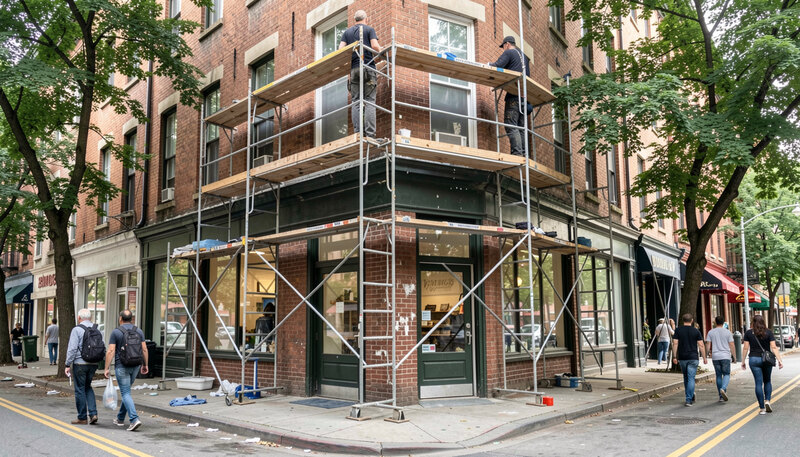
Neighborhood revitalization is the deliberate rebuilding of a place that has lost housing, businesses and confidence. It is not a single project but a sequence: residents organize, a plan is written, early visible work builds trust, housing and commerce follow, and the result either keeps current residents in place or pushes them out. This guide walks through the sequence stage by stage, names who typically funds each stage, and explains the safeguards that keep revitalization answerable to the people who already live there.
What does a neighborhood in decline look like?
The starting condition is usually a combination, not a single wound. Vacant and abandoned buildings sit next to occupied homes. A grocery store has left and the closest fresh food is a bus ride away. Property values have fallen far enough that repair costs exceed what any owner could recover by selling. Public investment has slowed: sidewalks crack, streetlights fail, a school closes. Residents with resources move out, and the neighborhood loses the social fabric that once absorbed shocks. Revitalization begins by treating this combination as a system rather than as a list of broken buildings.
Stage one: organizing and planning
The first real work is human. Residents meet, often around a concrete grievance, and form or join a neighborhood association or a community development corporation. That organization surveys what exists: every parcel, every vacant building, every owner, every business. From the survey comes a plan with priorities, usually drafted over months of public meetings. Funders of this stage include city planning departments, foundations and intermediaries such as LISC, the Local Initiatives Support Corporation, which has backed neighborhood planning in hundreds of American communities since 1979. The plan matters because every later dollar is justified by reference to it.
Stage two: early visible wins
Trust is built with work people can see. Typical early projects are small and fast: boarding or demolishing dangerous vacant structures, clearing lots and planting them, repairing sidewalks and streetlights, cleaning a commercial block and fixing its facades. Money for this stage comes from municipal code enforcement budgets, federal community development block grants known as CDBG funds, and volunteer labor organized by nonprofits. The purpose is as much psychological as physical. A street that looks maintained signals to owners that repair is worthwhile and to outsiders that the neighborhood is organized.
Stage three: housing, the anchor investment
Housing is where revitalization spends its biggest money. Vacant buildings are gutted or replaced, scattered-site homes are rehabilitated, and new construction fills the worst gaps. Nonprofit developers usually lead, because they can blend subsidies that a for-profit builder cannot stack. The financing is layered: federal low income housing tax credits attract equity investors, city trust funds and federal HOME grants cover gaps, and community lenders supply the acquisition and construction loans that banks decline. The mechanics of that stack are explained in the guide to how nonprofit housing projects are financed, and the lenders themselves are covered in CDFI loan funds.
Stage four: commerce, services and public space
People need somewhere to shop and somewhere to gather. Commercial revitalization reuses corner stores, recruits a grocery or pharmacy, and improves main street blocks with facades, lighting and trees. New Markets Tax Credits can pull private equity into a supermarket or clinic in a low income census tract. Community facilities follow the same pattern: health centers, childcare and libraries built with tax credit equity and patient mission capital. Public space completes the stage: parks, plazas and trails funded by city capital budgets and conservancies. A neighborhood where housing improves but commerce never follows stays fragile.
Who pays for each stage?
The funding ladder looks confusing until each rung is matched to its stage. Planning and organizing: foundations, city planning funds, intermediaries. Early physical work: CDBG, city budgets, volunteers. Housing: tax credit equity, HOME grants, local trust funds, community lenders. Commerce and facilities: New Markets Tax Credits, bank community lending, hospital and university anchor budgets. Long term stewardship: rents, service contracts and endowments. The common thread is that no single source funds a whole neighborhood. Each rung exists because the previous one de risked the project enough for the next money to arrive. The full map of who provides community capital is in what community investment means.
How do residents keep a real say?
Revitalization that ignores residents becomes displacement with better landscaping. The safeguards are structural. Community development corporations are governed by boards drawn substantially from the neighborhood. Federal programs require resident participation plans and relocate tenants when assisted projects are built. Some cities fund district councils with formal review power. The strongest protection is ownership: land trusts, limited equity cooperatives and deed restrictions keep homes affordable after the ribbon is cut. Residents who understand the programs can also use law designed for them: in Washington DC, tenant opportunity laws give organized tenants the first chance to buy their building, a mechanism explained in the guide to DC affordable housing programs.
What does success look like?
Success is measured in who remains, not only in what is built. Vacancy falls, yes, and investment rises, but the residents who organized in stage one should still be there to benefit. Failure has two familiar faces: the project that stalls after the early wins because housing money never arrives, and the project that succeeds so thoroughly that taxes and rents expel the community it was meant to serve. The difference between the two outcomes is decided early, in the plan and the ownership structure, which is why this guide began with organizing rather than construction.